Introduction
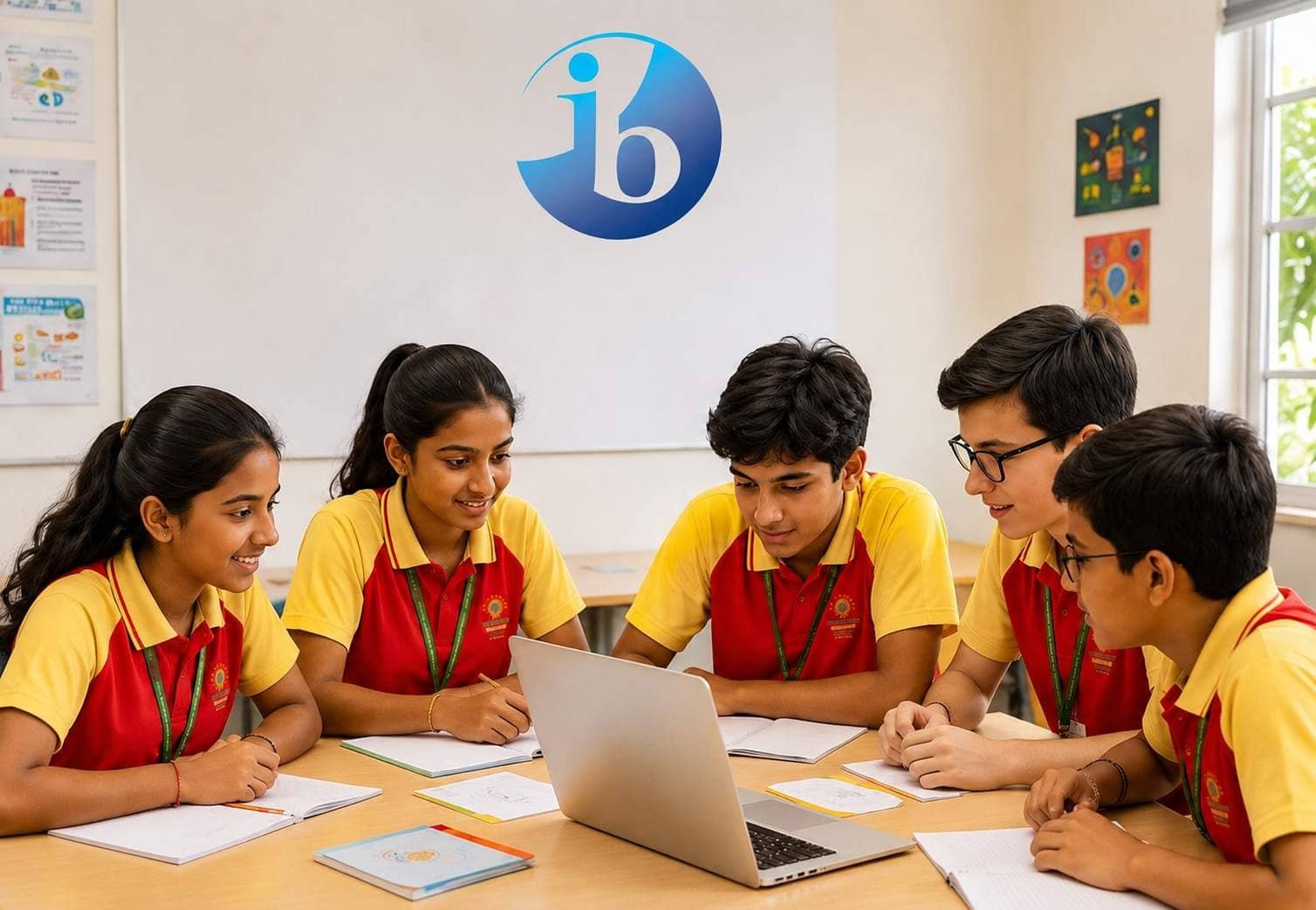
If you have been researching school options for your child, you may have come across the term "IB" quite often. IB stands for International Baccalaureate, and it follows a very different approach compared to conventional school boards. At Sunshine Worldwide School in Old Goa, understanding this difference has shaped how we think about preparing our students for a truly global future.
Key Takeaways
- The International Baccalaureate (IB) programme focuses on understanding concepts rather than memorisation.
- The three stages of the programme develop independent thinking step by step.
- Community service and creativity are integral parts of the IB programme.
- The IB programme's global recognition makes it widely accepted by universities worldwide, giving students a strong foundation for studying abroad.
How IB Approaches Learning Differently
The biggest difference lies in how the IB approaches learning. Instead of focusing mainly on memorising facts and reproducing them in exams, the IB encourages students to understand the "why" behind everything they learn.
Students are encouraged to ask questions, research independently, and connect what they learn in class to real-life situations, whether that is a global issue in the news or something happening in their own community.
The Programmes of the IB Continuum
IB is divided into different programmes based on age group. The Primary Years Programme is for younger children, the Middle Years Programme is for early teenagers, and the Diploma Programme and Career-related Programme are for the last two years of school.
Each of these stages is designed to slowly build a student's ability to think independently and take charge of their own learning, rather than relying only on instructions from teachers.
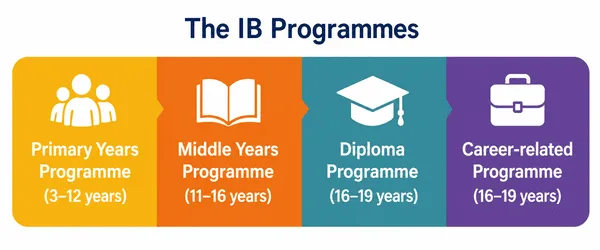
This model has experienced rapid growth worldwide. Based on the International Baccalaureate's facts and figures, the organization now provides its four programmes to more than 1.95 million students in over 6,200 schools in more than 160 countries, with the number of programmes offered worldwide rising by 34.2% from 2020 to 2024 alone.
This scale shows how many families, including those choosing the international school in Goa, are shifting toward an inquiry-based education model.
The IB Learner Profile
One unique feature of IB is the IB Learner Profile. This is a set of qualities like being curious, open-minded, caring, and reflective, which IB tries to build in every student, alongside academic knowledge.
It is not just about what a child knows, but also about the kind of person they are becoming. In a place like Goa, with its mix of cultures, languages, and history, this open-minded and curious approach fits naturally into daily school life.
How IB Assessments Work
Assessments in IB are also different. Along with exams, there is a strong focus on projects, presentations, essays, and even personal reflection. In the Diploma Programme, students have to write an extended essay on a topic of their choice and take part in something called "Theory of Knowledge," where they examine how we know what we know.
This is quite different from the exam-focused approach in many other boards, and it encourages a depth of thinking that stays with students well beyond school.
Community Service and Creativity as Core Requirements
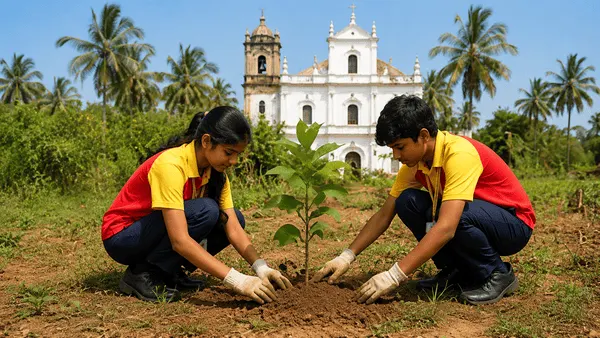
IB also places importance on community service and creativity, not as extra activities but as a required part of the programme. Students are expected to take part in social work, sports, or creative projects as part of their overall development, not just as something to add to a resume.
Goa, with its heritage sites, coastal communities, and local social initiatives, gives our students meaningful, real opportunities to fulfil this part of the programme in ways that feel genuine rather than forced. This is one reason why families exploring holistic, future-ready education in Goa often find the IB approach a natural fit.
Global Recognition of the IB Diploma
Due to the fact that schools in many countries follow the IB programme, universities worldwide are familiar with it, especially for students planning to pursue education abroad.
The IB maintains a recognition statements database, covering countries, states, provinces and universities that formally recognise the Diploma Programme, making it easier for families to find out how the qualification is viewed in their desired destinations
At the time of the assessment session in November 2025, IB graduates joined a global community of 2.7 million lifelong learners across 157 countries where the Diploma and Career-related programmes are offered, with a world average Diploma score of 29.3 points at that session.
This global recognition is something families increasingly value, especially as more students look beyond India for their higher education.
Conclusion
In simple words, IB is less about scoring marks and more about becoming a thoughtful, well-rounded learner. For parents in Goa who want their child to develop strong thinking skills, curiosity, and a global outlook, while still staying rooted in the culture and community of Goa, Sunshine Worldwide School's IB programme offers a very different but rewarding path compared to more traditional boards.