Introduction
When people hear about school boards, they usually think about which one leads to better marks or easier exams. But IB, the International Baccalaureate, takes a different approach altogether.
It is designed to prepare students for life, not just for a single test at the end of the year, and this philosophy is at the heart of how we teach at Sunshine Worldwide School in Old Goa.
Key Takeaways
- IB teaches students how to think, not just what to think.
- Lessons connect to real-world issues, including those close to home in Goa.
- Long-term projects build time management and independence.
- CAS and regular presentations create well-rounded, confident students.
IB helps students adapt to university life, especially abroad.
Teaching Students How to Think
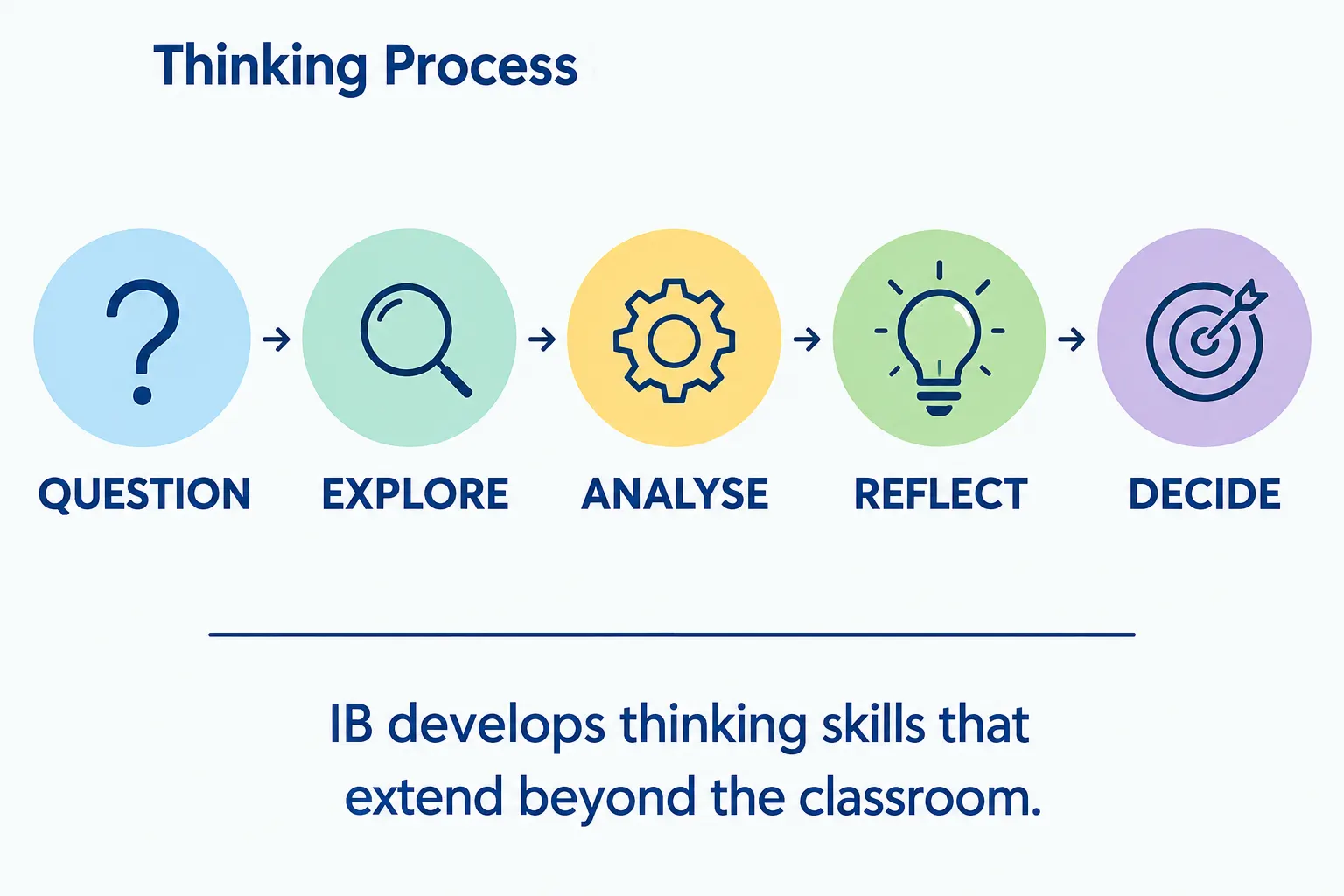
One of the core ideas behind IB is teaching students how to think, not just what to think. Instead of simply giving students information to memorize, IB classrooms encourage discussion, questioning, and problem-solving. Students are often asked to explain their reasoning, not just give the correct answer.
This habit of thinking things through carefully stays with them long after school ends, shaping how they approach decisions in college, careers, and everyday life.
This shift is also in line with India's National Education Policy 2020, which aims to promote critical thinking rather than rote learning.
Connecting Learning to the Real World
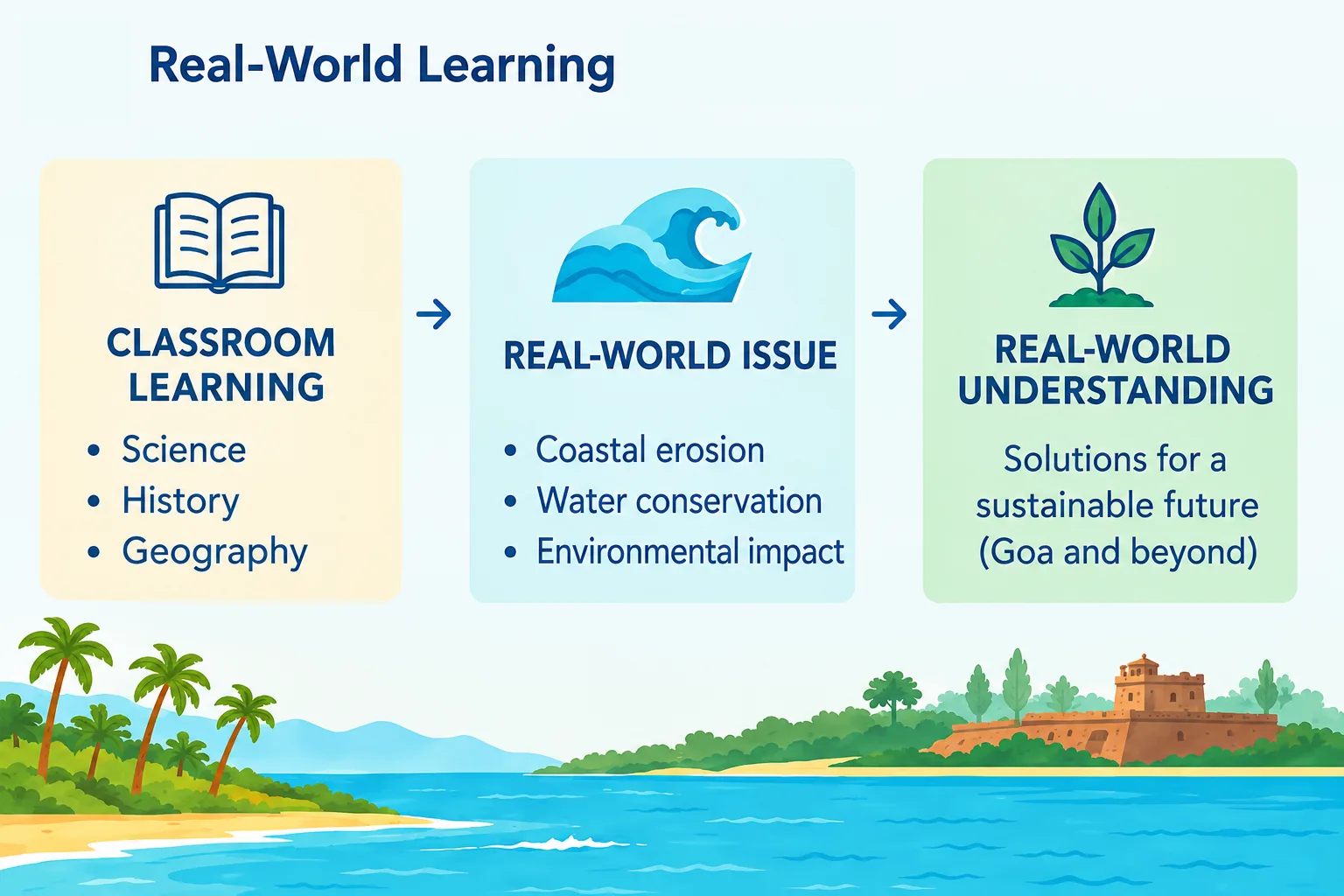
IB also focuses heavily on real-world connections. Subjects are not taught in isolation. A history lesson might connect to current events, or a science topic might be linked to an environmental issue happening in the world today, or even closer to home, such as coastal erosion or water conservation in Goa.
This helps students see that what they learn in school actually matters outside the classroom too.
Building Time Management and Independence
Time management and independence are another big part of the IB experience. Students are given projects, essays, and assignments that require planning over weeks or months, not just last-minute preparation.
This teaches them how to manage their own time and take responsibility for their work, a skill that becomes extremely useful in college and later in their careers, wherever in the world that journey takes them.
Research backs this up. A study by ACER found that IB Diploma graduates progress through university at higher rates than non-IB students, and are more likely to complete their degree within five years.
CAS: Learning Beyond Academics
The IB Diploma Programme, meant for the final two years of school, is particularly known for building these life skills. Students take part in something called CAS, which stands for Creativity, Activity, and Service.
Through CAS, students engage in creative projects, physical activities, and community service, learning to balance different parts of their lives, not just academics.
Being located in Old Goa, our students have access to a wide range of local heritage, environmental, and community projects that make their CAS experience rich and meaningful, not just a box to tick.
Communication Skills for Every Profession
Communication skills also get special attention in IB. Presentations, group discussions, and written reflections are a regular part of the learning process.
This helps students become confident speakers and clear writers, skills that matter in almost every profession later in life, whether they go on to study science, business, the arts, or anything in between.
Preparing Students for University and Beyond
Because of this well-rounded approach, students who complete the IB programme often find it easier to adapt to university life, especially abroad, where independent thinking and self-management are expected from day one.
Our teachers at Sunshine Worldwide School work closely with students throughout the Diploma Programme to make sure they are genuinely ready for that transition, not just academically but personally as well.
The same IB source notes that DP graduates in Turkey had higher subject grades, overall grade point averages, and graduation rates than non-IB students.
IB at Sunshine Worldwide School
Sunshine Worldwide School is a top international school in Goa that offers both IB and CBSE curricula. The school focuses on inquiry-based, holistic, and future-ready education.
Conclusion
In short, IB does not just prepare students to pass exams. It prepares them to think clearly, manage their time, communicate well, and care about the world around them, starting right here in Old Goa.
For families looking at long-term growth rather than just short-term exam results, IB at Sunshine Worldwide School offers a meaningful and practical path forward.
Frequently Asked Questions
Is IB harder than CBSE?
Not really. They are simply different in style. IB focuses more on inquiry, project work, and expertise in different subject areas, whereas CBSE follows a more structured, syllabus-based path.
Is IB accepted by universities in India and abroad?
Yes, IB is acclaimed in universities worldwide. Admission criteria vary from one university to another, so it is best to confirm them on each university’s official admissions page.
Can a student move from CBSE to IB?
Moving from CBSE to IB is possible in many cases. It depends mainly on what grade the student is in, what subjects he/she has chosen, and what the school's admission process is, so it is best to speak directly to the school.
When is the right age for children to enroll in IB?
Children can start with the Primary Years Programme, which is designed for ages 3 to 12.
Is IB suitable for every child?
IB is good for students who enjoy asking a lot of questions and working on projects. With the right support from teachers, children with different learning styles can also excel.
References
- Press Information Bureau, Government of India. National Education Policy 2020: https://pib.gov.in/FactsheetDetails.aspx?Id=148590
- International Baccalaureate Organization. An investigation of postsecondary patterns and pathways of IB graduates in the Australian tertiary education sector (ACER, 2012): https://ibo.org/research/outcomes-research/diploma-studies/an-investigation-of-postsecondary-patterns-and-pathways-of-ib-graduates-in-the-australian-tertiary-education-sector-2012/