Introduction
Deciding which educational board to choose for your child can be challenging in today's educational environment, which keeps evolving all the time. The CBSE board (Central Board of Secondary Education) is a government-run, country-wide body that governs curriculum and examinations for thousands of schools across India.
In this blog, we take a look at the reasons why the CBSE board remains a trusted standardized education system for building a strong academic foundation.
Key Takeaways
- CBSE follows a uniform education system that is acknowledged both in India and abroad.
- CBSE exams are based on a knowledge-based evaluation system mainly through continuous assessment and not just rote learning.
- CBSE teaching approach combines digital classrooms with skill-oriented learning.
- A well-structured syllabus equips students for JEE, NEET, and beyond, building critical thinking, communication, and decision-making skills for life.
- CBSE gives the freedom to choose from Science, Commerce, and Humanities streams.
Understanding the CBSE Exam System
The days of rote learning are gone. The CBSE exam system now focuses on knowledge-based assessments and prompts children to really grasp the ideas and not just memorise them.
The CCE Framework: The Continuous and Comprehensive Evaluation method assesses students all year long, academically and beyond; easing pressure on students at the time of exams and nurturing steady, joyful learning.
The CBSE Teaching Methodology
The CBSE teaching methodology emphasizes curiosity and real-world skills:
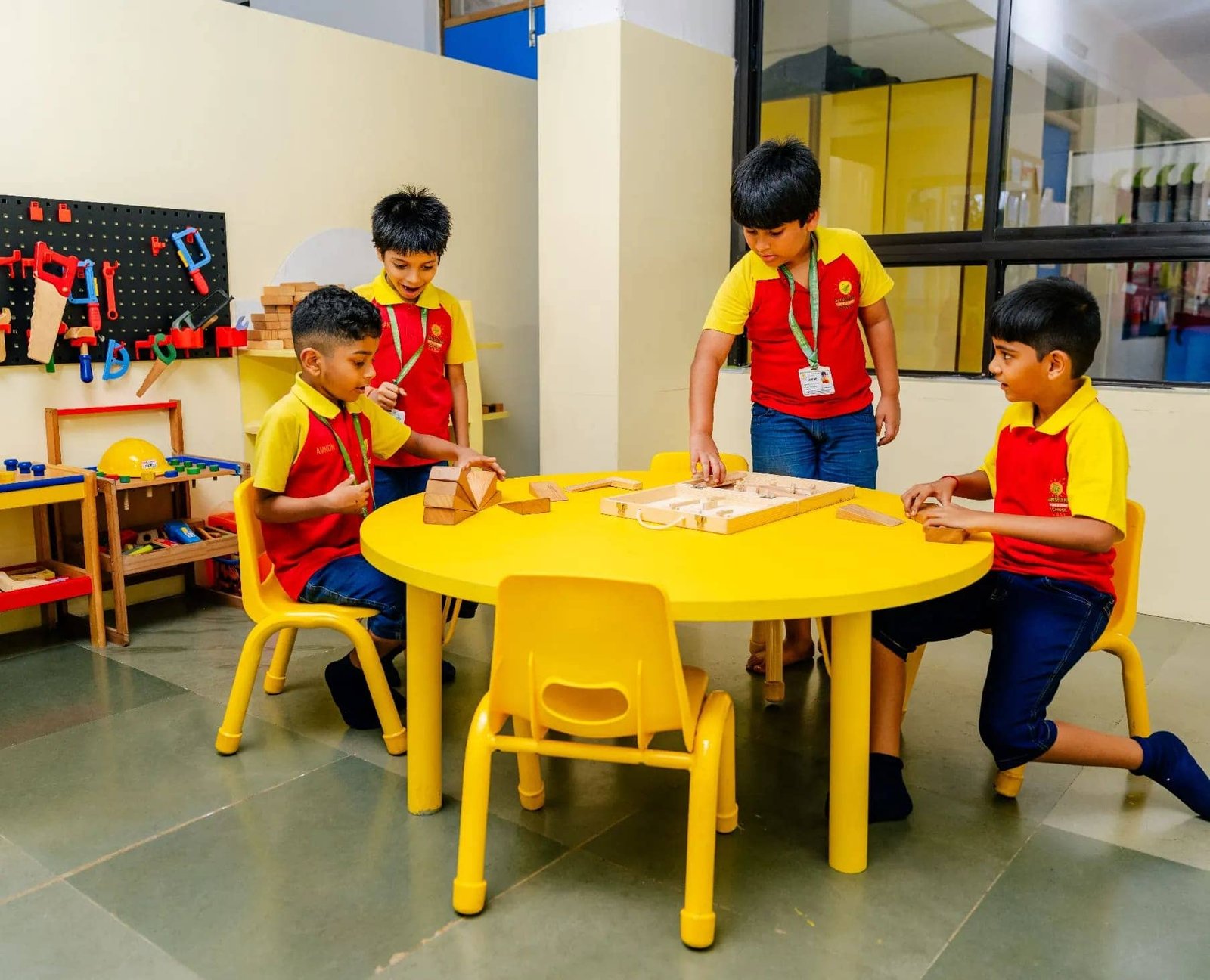
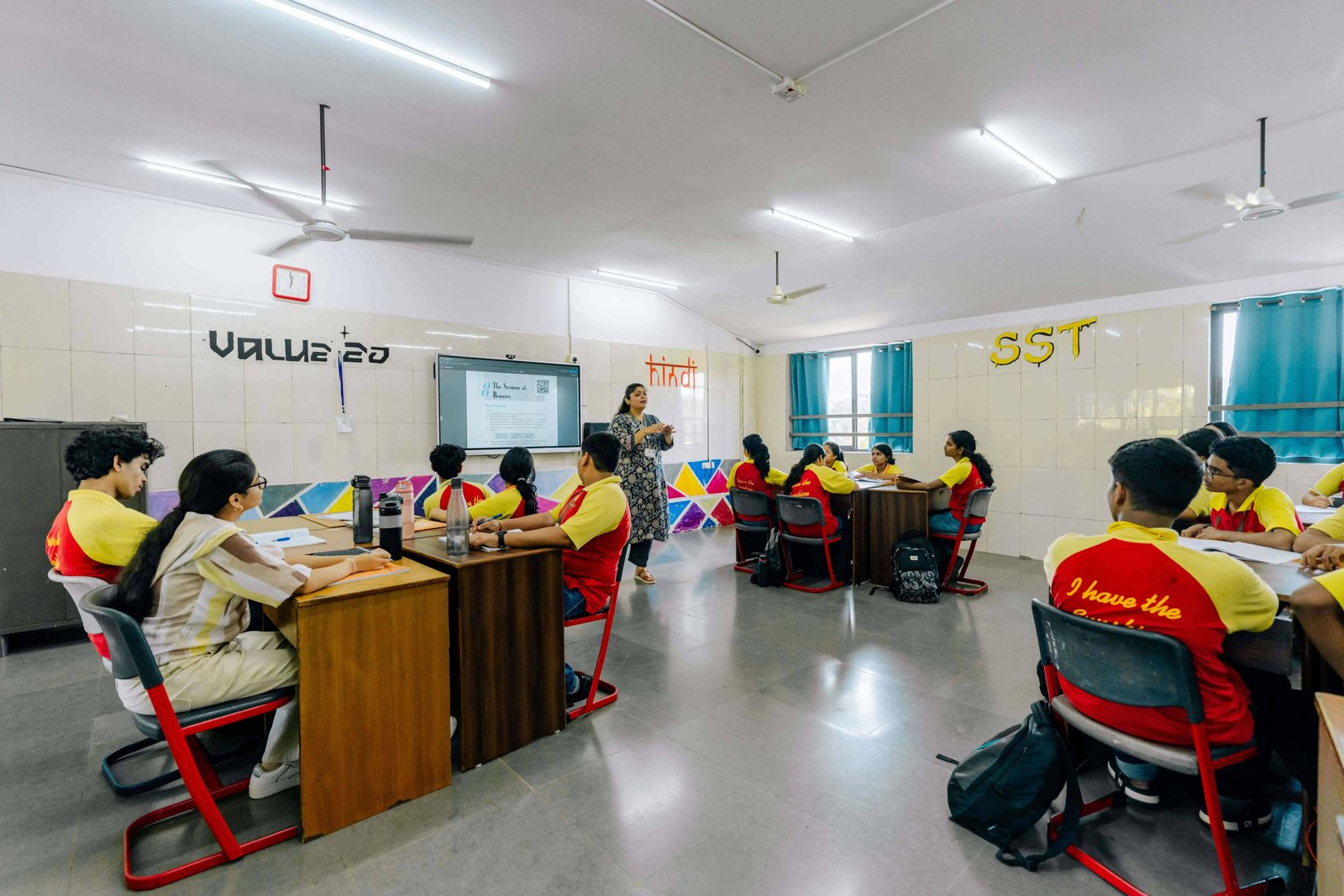
- Interactive & digital classrooms with the help of multimedia to make lessons more engaging
Skill-based learning centred around communication, critical thinking, and leadership.
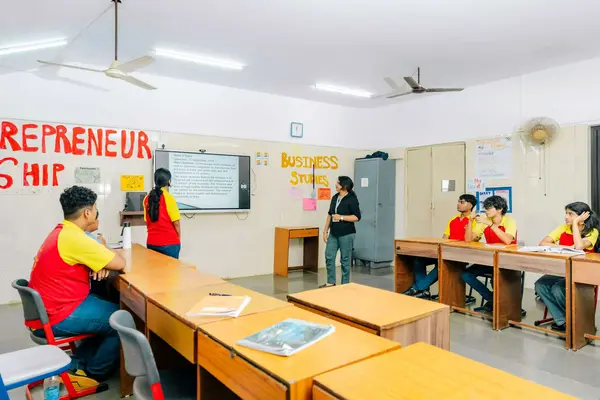
At Sunshine Worldwide School, we implement the CBSE teaching approach by providing an excellent academic environment with a child-first atmosphere.
CBSE Syllabus Benefits
The CBSE syllabus benefits are rooted in a thoughtfully designed structured curriculum:
- Building a strong base for major subjects like Math and Science
- Students are free to pursue Science, Commerce, or Humanities based on their individual interests
- Fosters Linguistic diversity, offering learners the opportunity to develop proficiency in multiple languages.
What Are the Benefits of the CBSE Board?
The benefits of the CBSE board are:
- Preparing for competitive exams: The syllabus closely aligns with JEE and NEET, reducing the necessity of external coaching.
- National and global recognition: The CBSE board is best for transferable-job families needing continuity across cities or countries
- Holistic growth: Sports, arts, and value education are integrated as part of the school life.
Tips for Parents: Supporting Success in CBSE Schools
- Give importance to concept clarity over marks
- Encourage curiosity-led learning at home
- Support balance between studies and extracurriculars
- Stay engaged through parent-teacher communication
- Celebrate the child's efforts, not just results
The benefits of studying at a CBSE school shine brightest in campuses that offer both academic rigour and a truly caring atmosphere - exactly the philosophy at Sunshine Worldwide School, Goa's holistic international school. Built on the principle of "freedom without fear, responsibility over discipline," the school provides students with a well-rounded, global education.
Conclusion
The CBSE board gives a strong academic foundation through a blend of structure and flexibility that prepares children not only for exams but also for life. Sunshine Worldwide School offers such a pathway, with a purpose-built, child-friendly learning environment where students experience both academic and emotional growth - truly reflecting its nurturing school spirit.
Summary
The CBSE board is India's national education system, known for its standardized curriculum, well-structured syllabus, and strong exam-preparation focus. Also, it gives students the freedom of flexible stream choices, alignment with JEE/NEET, and nationwide recognition, and thus it has become one of the most preferred options for families who want to give a strong academic foundation to their children.
FAQs
Is CBSE harder than IB?
Not exactly harder, just that the CBSE system is more exam-focused, whereas IB boards lean toward project-based learning. Essentially, both Boards balance application-based learning effectively.
Can a child switch from another board to CBSE midway through school?
Yes, especially before Class 9, when schools can quickly assess the child and help them adjust to CBSE-level studies.
Is CBSE recognised outside India?
Yes, it is accepted worldwide by universities and boards, helpful for families considering relocation or a move abroad.
Does CBSE rely too much on rote learning?
Not anymore; reforms like the CCE framework now emphasise deep understanding and critical thinking over rote memorisation.
What sets apart the CBSE syllabus from the state board syllabus?
CBSE offers a uniform, nationwide syllabus, whereas the state board syllabus varies from region to region - making it helpful for families who relocate often.