Introduction
Most classrooms continue to operate according to one model - the teacher lectures, and the student retains. With today's world requiring more than a one-size-fits-all approach to learning, inquiry-based learning offers a new framework by changing the way educators approach teaching and introducing the importance of questioning and encouraging students to think critically; this blog will show you how inquiry-based learning works, its benefits, and how you can get started with these types of approaches through real-world classroom examples.
Key Takeaways
- Inquiry-based learning (IBL) transitions students from being passive listeners to active investigators.
- Inquiry-based learning follows a 5-stage process: Question, Plan, Investigate, Create, and Reflect.
- IBL also helps develop critical thinking skills, collaborate with peers, and solve real-world problems.
- IBL works within existing curricula - not against them.
- Sunshine Worldwide School in Goa employs inquiry-based learning practices in its everyday learning.
Summary
Inquiry-based learning is an effective way to teach students by having them ask questions, investigate issues, and reflect on their findings - rather than just passively receiving information from the instructor. In this blog post, you will find out what the inquiry-based learning process entails, some of the methods that can be used for facilitating it, and how using this method will help students develop into better individuals in today's complex society.
What Is Inquiry-Based Learning?
Imagine a classroom where students are discussing the disappearance of local fish, creating the budget for their school, and conducting interviews with the older generation about a festival in Goa. This is inquiry-based learning.
Inquiry-based learning (IBL) is different than traditional education (where the teacher provides the answers) because it begins with the student asking a question. Students will examine, collect evidence, and build their own understanding. As such, an inquiry-based teacher acts as a facilitator rather than a gatekeeper.
Core principles: Questioning, curiosity, discovery learning, evidence, and reflection.
The Inquiry-Based Learning Process: 5 Steps
- Get students excited about what they're going to learn by giving them a real-life problem or "wow" question.
- Start organizing your thoughts for an investigation using KWL charts or mind maps.
- Research the problem using many types of evidence: reading books, doing experiments, conducting surveys, field trips, etc.
- Show your understanding of the material in a presentation format, such as models, posters, and/or sharing the results verbally.
- Reflect on the project to determine how you feel about your results (what surprised you) and how you would handle the project differently if you had to do it again.
The steps within this inquiry-based learning process reflect how those in the workplace explore and address issues, which can be very relatable to the students as well.
Inquiry-Based Learning Strategies for Teachers
- Engage with a "Wow" question related to local issues like Mapusa's traffic and plastic pollution.
- Use visible questioning routines- asking students, "What do you wonder?" "How can you learn more?"
- Create anchor charts and provide question stems to help support students.
- When assigning groups, give each student a specific role for that group and allow them to assess each other's performance in that role.
- Every inquiry must be tied to your curriculum- IBL is an enhancement to your curriculum, not an alternative.
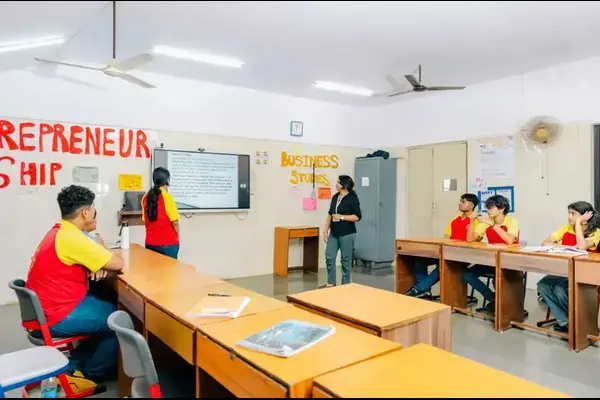
Examples of Inquiry-Based Learning in the Classroom
- Science (4-6 grades): Why is it challenging to find local fish? Students can do an investigation by asking fishers and analyzing data from the investigation.
- Math (5-7 grades): Plan an event at school with a real budget - with actual costs and actual decisions.
- Social Studies (3-5 grades): Research and interview elders about a local festival.
- Interdisciplinary (All grades): Find ways to decrease the amount of plastic at school: perform an audit, survey, and action plan to implement changes.
Each example builds problem-solving skills, critical thinking, and communication skills simultaneously.
Key Benefits of Inquiry-Based Learning
- Enhanced retention via experience-based learning
- Increased focus on critical thinking development and creativity within the classroom environment
- Enhanced student motivation and ownership
- Increased collaboration and communication with peers
- Preparedness for real-life situations after completing their learning assessment.
Sunshine Worldwide School, one of the best international schools in Goa, incorporates inquiry-based learning every day into its IB and CBSE curriculum. We aim to develop children who ask questions and think independently & who are lifelong learners, not just students who'll sit an exam and pass.
Conclusion
Inquiry-based learning trains children to live in a world where there are more questions than answers. At Sunshine Worldwide School, we live out this philosophy daily - as real education is not about passing an exam; it is about a lifelong love of learning. Would you like to transform the quality of your child's education? Come visit us at Sunshine Worldwide School to see how we honour the curiosity of every child.
FAQs
How does inquiry-based learning differ from traditional education?
In inquiry-based learning, students are encouraged to explore and find solutions to questions that they ask themselves rather than being given answers by their teachers; this has the potential to lead to deeper meaning being constructed than through rote memorization.
What are the main advantages of using inquiry-based approaches?
Some of the most significant are a more profound understanding, an enhanced ability to think critically, intrinsic motivation, improved teamwork & collaboration, and being ready for "real-world" applications when they complete school.
Can you use inquiry-based learning in an examination-driven education system?
Yes, smaller, more concentrated inquiries can meet curricular expectations; however, they also provide opportunities for students to build their higher-order thinking skills.
What are some examples of inquiry-based learning?
Creating a budget while studying math, investigating your environment through an ecological project in science, etc, may all be completed, requiring minimal resources.
I am interested in trying IBL for the first time; where do I begin?
Select one lesson; identify one driving question; make sure the setting is simple. Implementing one IBL experience per week will positively impact your learning environment.